
Keeping Pace with Change: Why Embedded Systems Must Deliver Agility, Resilience, and Endurance
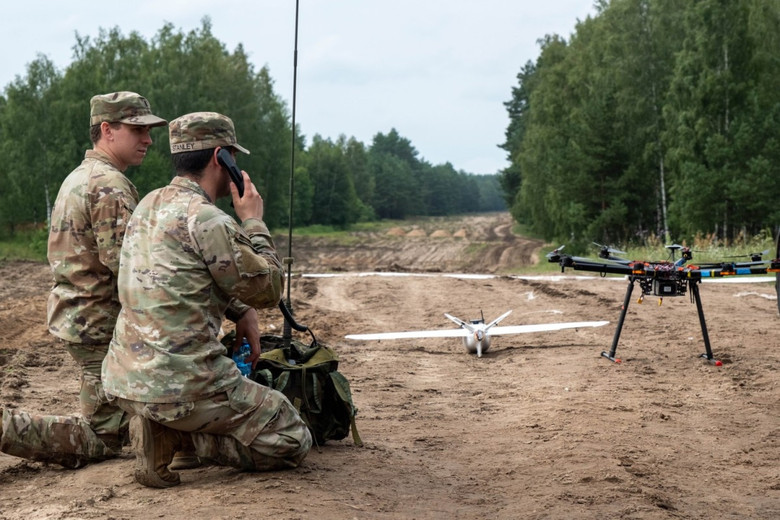
On a clear afternoon over a contested airspace, a drone suddenly appears on radar. Within seconds, more follow, and they’re small, fast, and unpredictable.
For the U.S. Army’s air and missile defense operators, every moment counts. The difference between mission success and mission failure is measured in milliseconds. During that brief window, sensors must connect instantly, embedded systems must process floods of data at the edge, and command links must hold steady even under electronic interference.
This scenario illustrates the reality of modern defense operations:
- Threats evolve quickly.
- Conditions shift constantly.
- Technology must keep pace with what comes next.
Embedded systems sit at the center of that challenge. They are the backbone of communications, autonomy, logistics, and command, some of the Army’s most crucial areas. When designed effectively, they embody three essential qualities — agility, resilience, and endurance — that allow the Army and its partners to adapt as needed, withstand disruption, and sustain performance across decades of service.
Agility: Adapting Quickly to New Mission Demands
Defense programs cannot afford to restart every time requirements shift. Agility is about adapting rapidly while building on proven foundations.
“It’s always safer to design the system for the environment in which it’s going to operate,” said Jeff Baldwin, Director of Engineering at Sealevel Systems, Inc. “We’ll design from scratch but learn as much from the past as we can and then build an efficient system for the future.”
One path is through open standards and modular structures such as MOSA, SOSA, and FACE. By ensuring components from different vendors can work together, program managers enable plug-and-play integration across vehicles, ships, and systems. This accelerates deployment and ensures technology can evolve without major redesign.
Another path to agility comes from semi-custom design, as Senior VP of Sales Earle Foster explained.
“Semi-custom is the bridge between rigidity and reinvention,” he said. “It lowers uncertainty and delivers exact-fit performance while preserving budget and schedule.”
In practice, that means leveraging validated building blocks and tailoring only what’s necessary, getting Army programs to deployment faster while reducing risk.
The COM Express architecture shows this principle in action. By pairing standardized compute modules with customized carrier boards, systems can be rapidly adapted for mission-specific requirements.
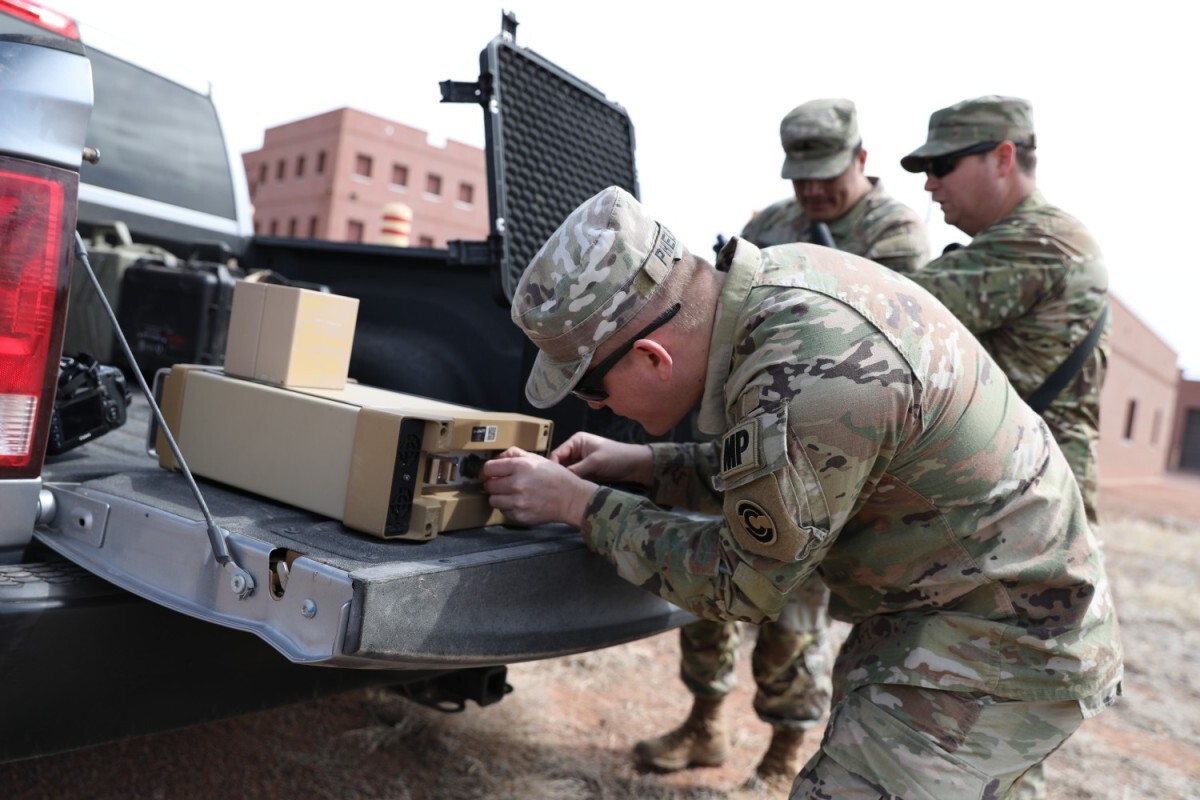
That approach allows engineers to reuse proven I/O circuits, cutting design time and minimizing surprises. For the Army, it means new mission profiles can be met without losing precious months under demanding conditions.
Agility is equally critical in sensor fusion — merging data from cameras, radar, and other inputs into a single operational picture — and in autonomy, where systems use that information to make routine decisions on their own so soldiers can stay focused on the mission.
There may be no time to lose in an extreme or hostile environment. From unmanned aerial vehicles (UAV) to ground vehicles, platforms must ingest data from multiple sensors and then process that information fast enough to support real-time decisions.
Resilience: Surviving Disruption and Bouncing Back
In contested environments, disruption is inevitable. Systems must survive it and bounce back without costly intervention.
Resilience begins with ruggedization. Embedded systems must withstand extreme temperature ranges, high shock and vibration, humidity, and reduced air pressure. Foster pointed to computer on module designs as an example of embedded ruggedization.
“COM systems are available in wide temperature range, negative 40 to 71 degrees Celsius,” Foster said. “So, it lends itself very well to rugged applications like the military for instance, and oil and gas, and long-term availability.”
Embedded design may include closed, fanless enclosures that block dust, moisture, and contaminants, ensuring reliability where commercial-grade equipment would fail. But resilience is more than physical toughness. It also means continuity and recovery.
Watchdog timers, failover mechanisms, and redundant paths are built in precisely to ensure that continuity. If a platform loses power or connectivity, it must recover on its own to keep autonomous functions operating when soldiers can’t intervene. Autonomous systems are only as strong as the system’s ability to withstand disruption from power loss, signal drop, and environmental shock.
Resilience extends to secure command and control. Embedded I/O must maintain reliable communications even in degraded conditions, whether under jamming attempts, crowded RF environments, or satellite latency.
Modern UAVs underscore this need. Without resilient communication architectures, they risk failure when line-of-sight is lost, or interference strikes. UAV and intelligent jamming research — Robots in the Sky: The Rise of Unmanned Aerial Vehicles and Intelligent Jamming — highlights how resilience must now include protection against electronic warfare as much as environmental extremes.
This isn’t theoretical. Sealevel has supported Army programs where rugged reliability was mission critical. In those deployments, the assurance that systems would continue operating — despite shock, weather, or interference — gave stakeholders confidence in the technology that they depended on for mission success.
Foster emphasized that dependability starts long before deployment, pointing to Sealevel’s wider manufacturing practices beyond any single product line.
“We build all of our printed circuit boards right here in Liberty, South Carolina,” Foster said of Sealevel’s Made in America rugged computing solutions. “When we do these custom designs, we also produce them and test them here. 100% testing is done before shipping to customers.”
Endurance: Lasting Through Long Lifecycles
Army programs rarely measure lifecycles in years. More often, they measure them in decades. Endurance ensures embedded systems remain viable, available, and effective throughout that span.
The foundation of endurance is designing to rigorous standards. Defense customers expect MIL-STD ruggedness, and Sealevel’s AS9100D certification embeds documentation, revision control, and supplier oversight into every project from the start.
Endurance also comes from proactive lifecycle management. Lifecycle support is a promise as much as a design feature.
“All of these products are using processors from the Intel embedded roadmap which is going to offer up to 15 years of life,” Foster said. “Sealevel manages the life cycle of the product for our customers so they’re not having to worry about obsolescence and change.”
When components do approach end-of-life, redesigns preserve form, fit, and function compatibility, sparing Army programs from disruptive midstream changes.
Efficiency contributes to endurance as well. Modern AI workloads demand more power and generate more heat, so optimizing systems for size, weight, power, cost, and cooling (SWaP-C²) extends mission life and reduces strain.
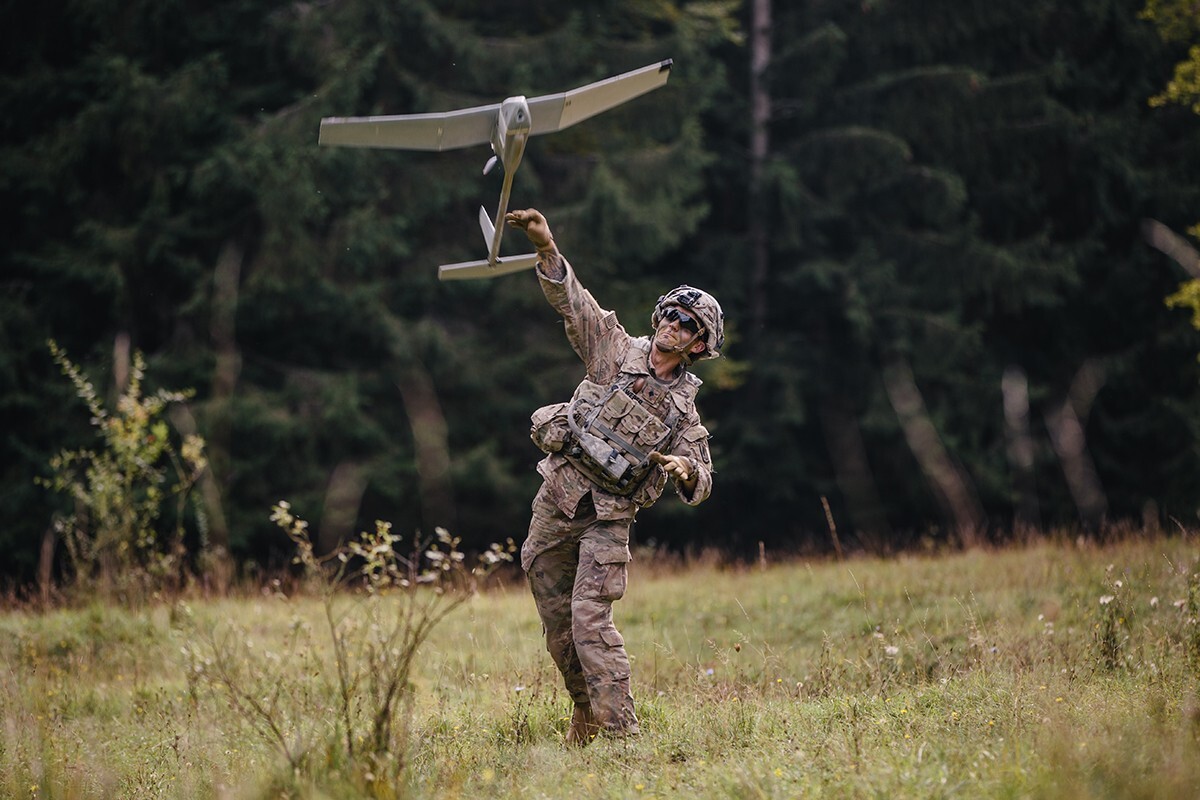
Endurance also anticipates future operational concepts. The UAV and intelligent jamming research explores ways to link drones into persistent aerial edge systems using low-power networking that could enable surveillance coverage far beyond the endurance of any single platform.
“AI is driving innovation in embedded systems because the workloads are more demanding,” Baldwin said. “You need more processing power, more throughput, and you have to do it without generating heat that kills the system.”
Designing today’s systems with flexibility ensures they can evolve alongside tomorrow’s defense innovations and not become outdated just as programs scale.
Looking Ahead
The drone swarm scenario that once was inconceivable is already today’s reality. Tomorrow’s challenges will only accelerate with faster aircraft, more sophisticated electronic warfare, and greater reliance on autonomous decision-making.
In contested skies and unpredictable domains, the Army’s success will hinge on embedded systems designed to adapt instantly, recover under pressure, and endure across decades of service. Agility, resilience, and endurance are the factors that will determine what happens next.
Categories: