
Designing Rugged Systems for AI at the Edge: Power, Heat, I/O, and Longevity

AI is changing how we design rugged systems at the edge. It brings higher demands for power, heat, and longevity that older systems were never built to manage.
AI draws more energy, and lifecycles of its primary components are just a few years, not decades. That means engineers have to design for higher performance in devices that run hotter faster, while still keeping the hardware dependable over the long haul.
Power, heat, I/O, and longevity have always mattered, but AI raises the stakes for all of them. To unlock AI’s capabilities, rugged systems must handle sudden current spikes, move concentrated heat without fans, and stay reliable while integrating the latest technologies.
That’s why AI is reshaping both stakeholders’ expectations and engineers’ challenges.
Stakeholders’ Rising Expectations
Decision-makers now expect rugged systems to run AI locally at the edge without needing data centers. That means analyzing video, interpreting sensor data, and making decisions on the spot, while still being reliable enough to keep up with workloads that once sat in server rooms but are now pushed into the field.
I’ve seen this firsthand. Years ago, training a model to recognize an object in video or another environment took enormous time, effort, and computing resources. And every time a big company pulled it off, it was usually a one-off implementation of their process. Today, small teams can do the same thing more easily by borrowing existing models or training lightweight ones of their own.
That shift is raising what people expect from rugged platforms, and we’re already seeing it in practice.
In one airborne defense program, for example, we built a general-purpose vision platform with multiple high-speed communication interfaces to ingest video data. We paired it with an NVIDIA-based compute core that could process information, making decisions quickly and accurately in a rugged environment.
It’s a clear example of how far AI has come and why the challenge now is for engineers to keep delivering on those expectations.
The Engineer’s Design Reality
Meeting those expectations doesn’t mean just putting a faster processor into a rugged enclosure. That only solves part of the problem. The real challenge is building complete AI-ready platforms that can adapt to changing workloads while staying reliable for as long as possible.
To do that, four elements must work together: power delivery, heat removal, I/O integration, and longevity planning. Of those four, power comes first. Without stable delivery to handle AI’s sudden surges, nothing else in the design can perform.
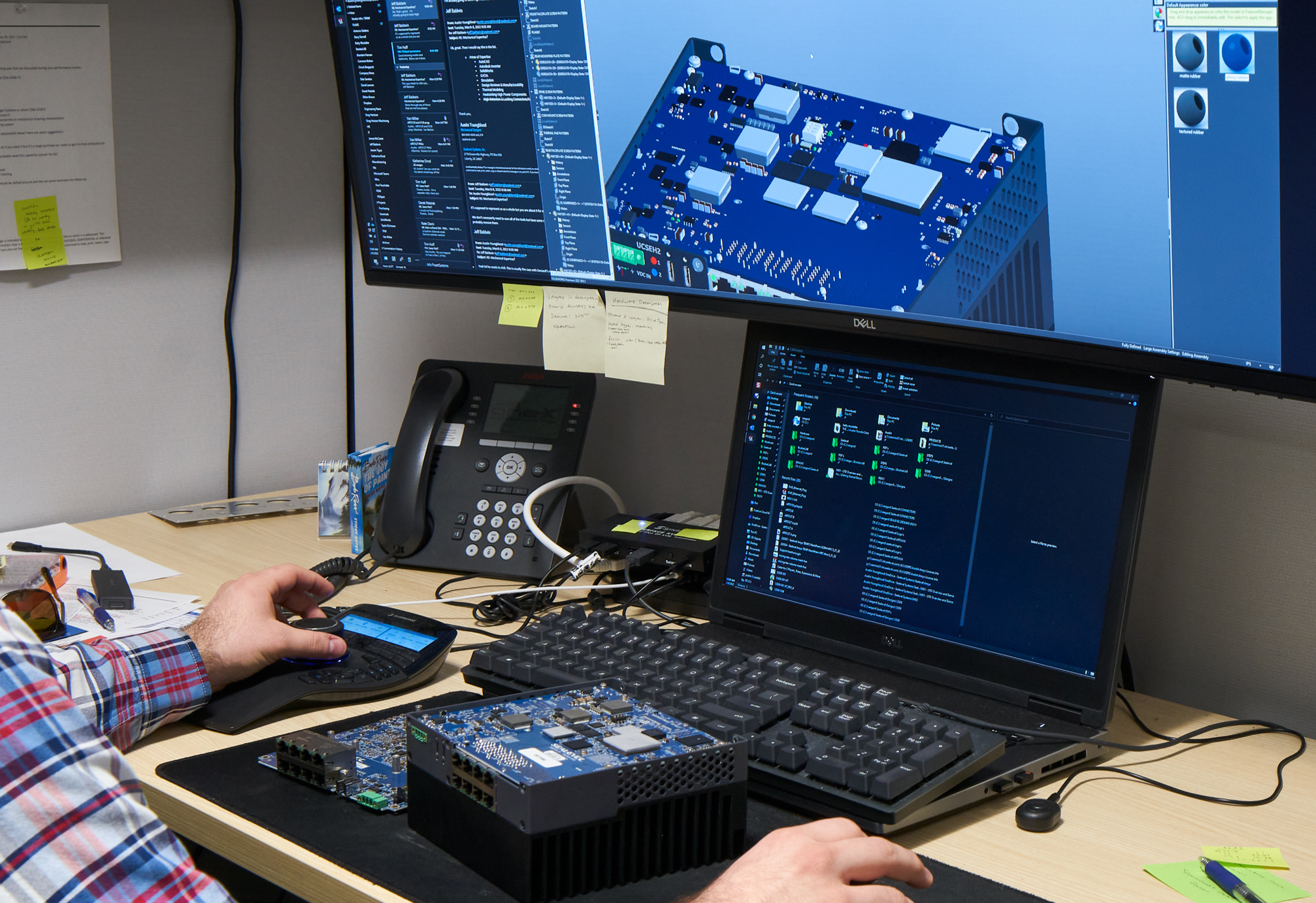 Figure 1: Sealevel's engineers test rugged AI components for efficiency, performance, reliability, and recovery.
Power Delivery
One of the biggest differences with AI workloads is how they use power. Traditional embedded tasks may draw current steadily, but AI is different. It can pull very high amounts of current for short bursts, and that behavior stresses the entire power architecture. For devices in the field running high-performance AI, delivering enough power to both the processor and its subsystems is critical to keep capability at its peak.
Oversizing everything is one way to handle surges, but it makes designs heavier and more expensive. A better approach is to engineer power supplies that respond quickly and deliver efficiently, conserving energy while minimizing wasted space. Even small improvements — reducing resistance loss or improving conversion efficiency — mean real energy and cost savings.
On location, you have to manage those quick current surges in the smallest space possible, because that’s what users expect. And those surges don’t just stress the power design, they also create concentrated heat that has to be removed quickly.
Heat Removal
Power consumption directly translates to heat, and managing that heat is one of the biggest challenges in AI-ready designs. Fanless systems are still preferred because moving parts tend to fail first, but AI pushes cooling strategies harder than before. The result is a more complex balance—keeping components cool enough for peak performance without sacrificing the long-term reliability rugged environments demand.
Processors can now spike to full load in microseconds, generating intense, localized heat and then dropping back down. Those short, high-power bursts are tougher to manage than the steady thermal profiles of older systems. To keep devices safe, we use better materials, heat pipes, and, in some cases, liquid cooling. Fans are generally avoided because they add moving parts, so the rest of the cooling components have to move heat away as quickly as it’s created.
And just as heat must be moved out quickly, data has to flow just as fast. Both demand designs that keep pace with AI’s speed.
I/O Integration
AI-capable processors are only as good as the data they can ingest. That makes I/O integration critical, as we saw in the airborne defense project.
Multiple high-speed interfaces were needed to capture and process video in real time. The challenge was fitting that capability into a compact, rugged enclosure that could withstand the demands of an airborne environment while integrating I/O.
It’s not just defense. Across industrial and aerospace applications, the same pattern shows up: the speed of I/O often sets the ceiling for what’s possible. A processor may have all the AI capability in the world, but without the right interfaces to feed it data fast enough, the performance never materializes.
Don’t put I/O at the end of the checklist. It must be built in alongside power and cooling, because dependable performance depends on all of them working together. Planning for I/O from the start prevents bottlenecks, avoids costly redesigns, and extends system life.
Longevity Planning
Longevity has to be rethought as well. In defense and industrial environments, customers often expect ten years of service from a platform. But AI’s lifespan is shorter.
You can’t expect today’s highest-performance parts to still be competitive ten years from now. Because we are in the early years of the AI revolution, the developments and leaps forward year over year are astounding. AI-capable designs today may be obsolete in five years, and in some cases, accelerators are outdated in months. That doesn’t mean we give up on long-term reliability. It means we design differently.
The focus shifts to creating platforms that can change as components evolve. We design with flexibility in mind, especially for edge computing, so processors, accelerators, or interfaces can be updated when needed without replacing the entire device.
AI Lessons Learned
AI has made one thing clear: users' expectations define engineers' challenges. Our goal is reliable performance for people who depend on AI-generated information in hard-to-reach places. In rugged environments, even one failure can turn a small disruption into a mission-critical problem.
That’s why we focus on power, heat, I/O, and longevity. Get those right in the design lab, and your systems will be built to handle AI reliably at the edge.
Embedded Insiders Podcast: Hear more from Jeff Baldwin on this topic in the December 4, 2025, episode, Designing for the Edge: The Race for Competitive AI.
 |
About Jeff Baldwin |
Categories: