
Designing for the Unexpected: Lessons in Adaptability, Validation, and Redundancy from the Hubble Space Telescope
Testing and Risk Mitigation for Space-Based Electronics
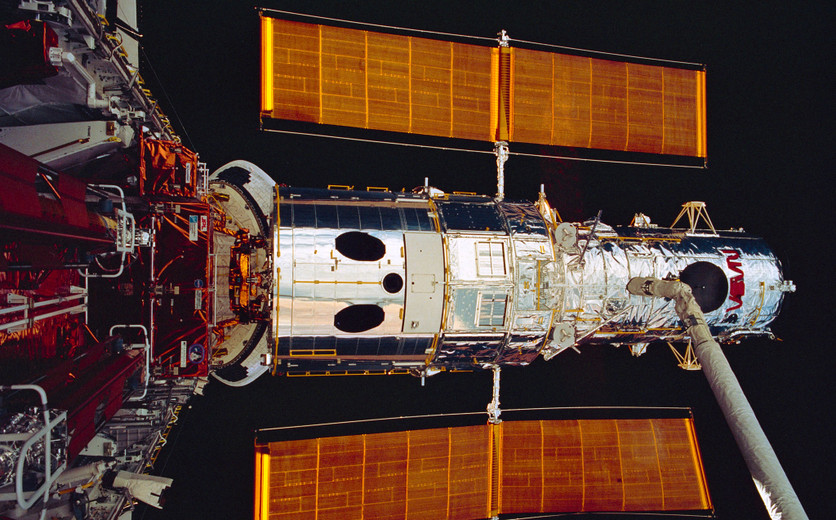
The Hubble Space Telescope is one of the great engineering and scientific achievements of mankind, and an early fault provides one of its most instructive missteps. The case of the Hubble – its initial mirror flaw and its subsequent repair – illustrates nearly every principle behind rigorous testing, quality assurance, and rugged design in aerospace and space electronics. It also provides an example of how robust designs and systems engineering with layers of redundancies and can overcome validation failures.
In April of 1990, the Hubble Space Telescope was deployed into low earth orbit from the NASA Space Shuttle Discovery. The development of Hubble represented the culmination of decades of research, design, and an extensive public lobbying campaign. The initial stages of the Hubble mission went off without a hitch, until the first images were sent back to Earth. Despite the success of the launch and deployment, the first images from the $1.5 billion telescope came back so blurry that they were essentially unusable.
To oversimplify the issue, the Hubble telescope uses a mirror based optical system to gather and focus light from the infrared, visible, and ultraviolet spectrum. The final Hubble design employs two hyperbolic mirrors to capture light from a wide field of view. While the design allows for excellent imaging performance, the size and shape of the mirrors are hard to fabricate and test, with no room for even the smallest imperfections. A NASA commission analyzed the blurry, flawed images and found that the concave shape of the main 7.9-foot-wide mirror was too shallow by around 2 microns, or approximately 1/50th the thickness of a sheet of paper.
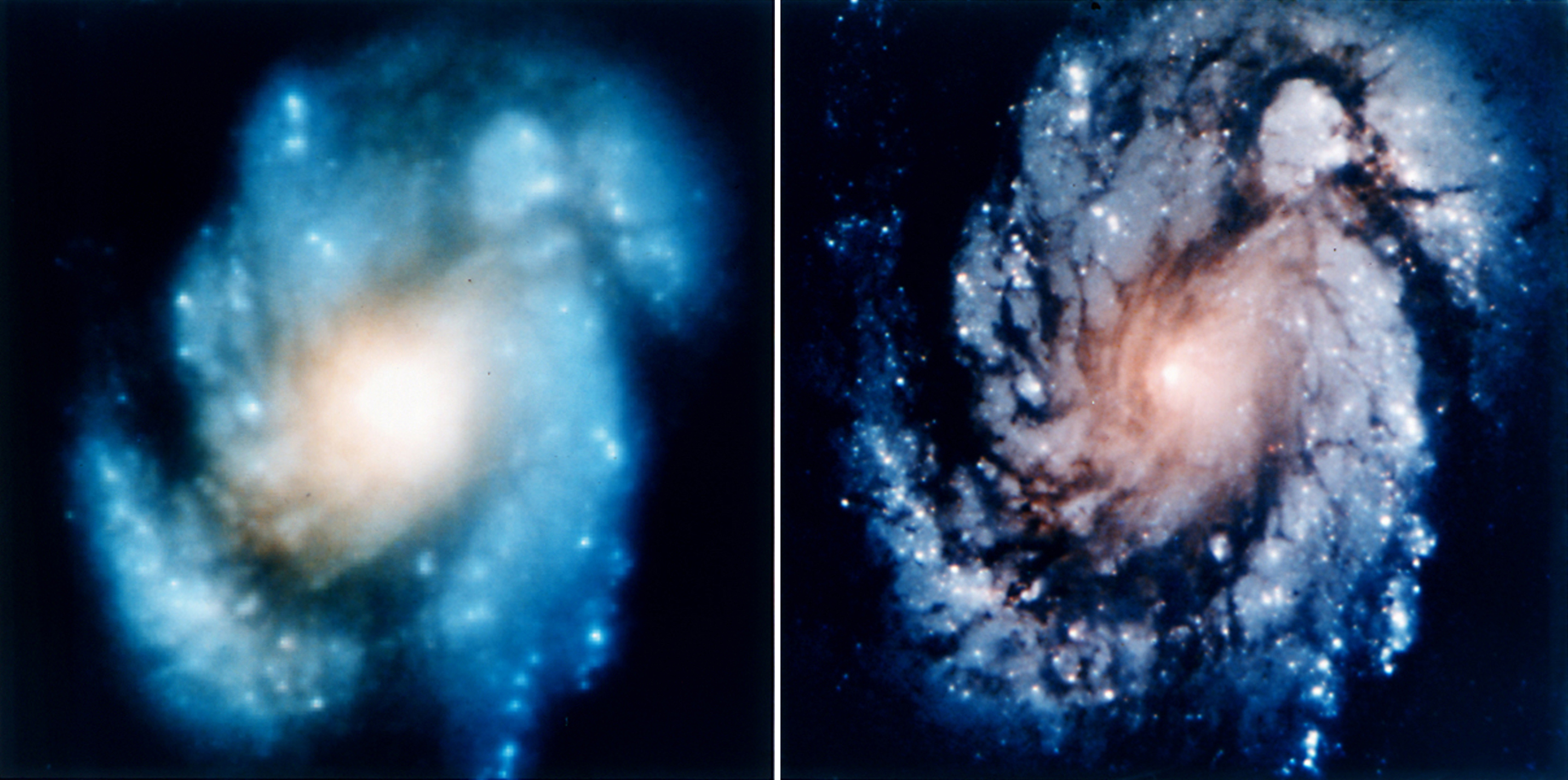
Figure 1: Hubble Image of the galaxy M100 before (left) and after (right) the 1993 NASA servicing mission.(NASA)
Testing and Modeling
Before launch, the mirrors of the Hubble Space Telescope were tested extensively. However, the testing equipment itself had an assembly error that went undetected, a 1.3 mm spacing discrepancy in a lens mount. The mirror was polished to perfection against an incorrect reference, producing spherical aberration caused by the mirror being 2 microns too shallow.
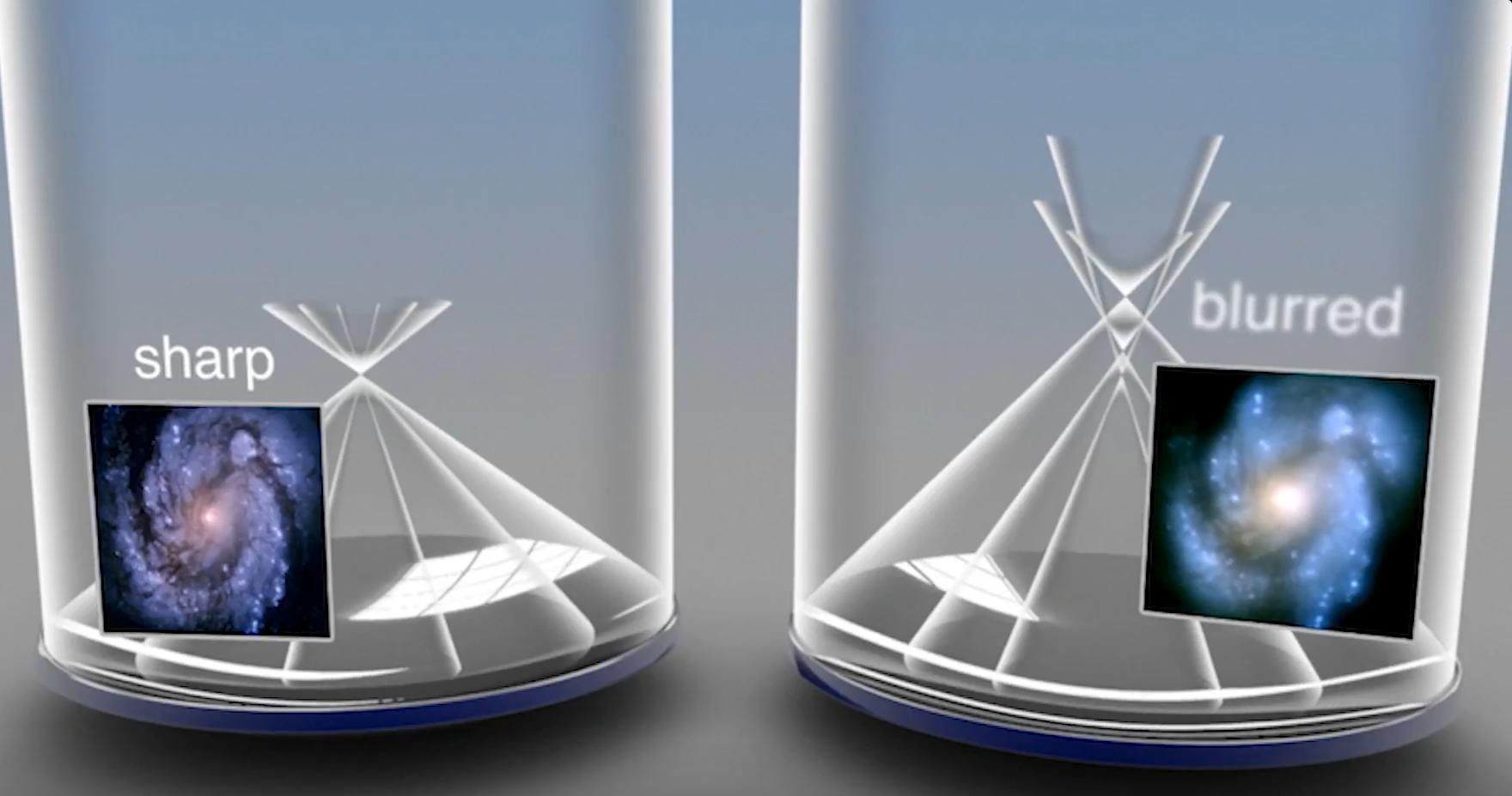
The Hubble Space Telescope should have directed all incoming light into a single focal point. However, the spherical aberration gave the primary mirror more than one focal point. In simplified terms, the Hubble Space Telescope produced the same effects as astigmatism in the human eye.
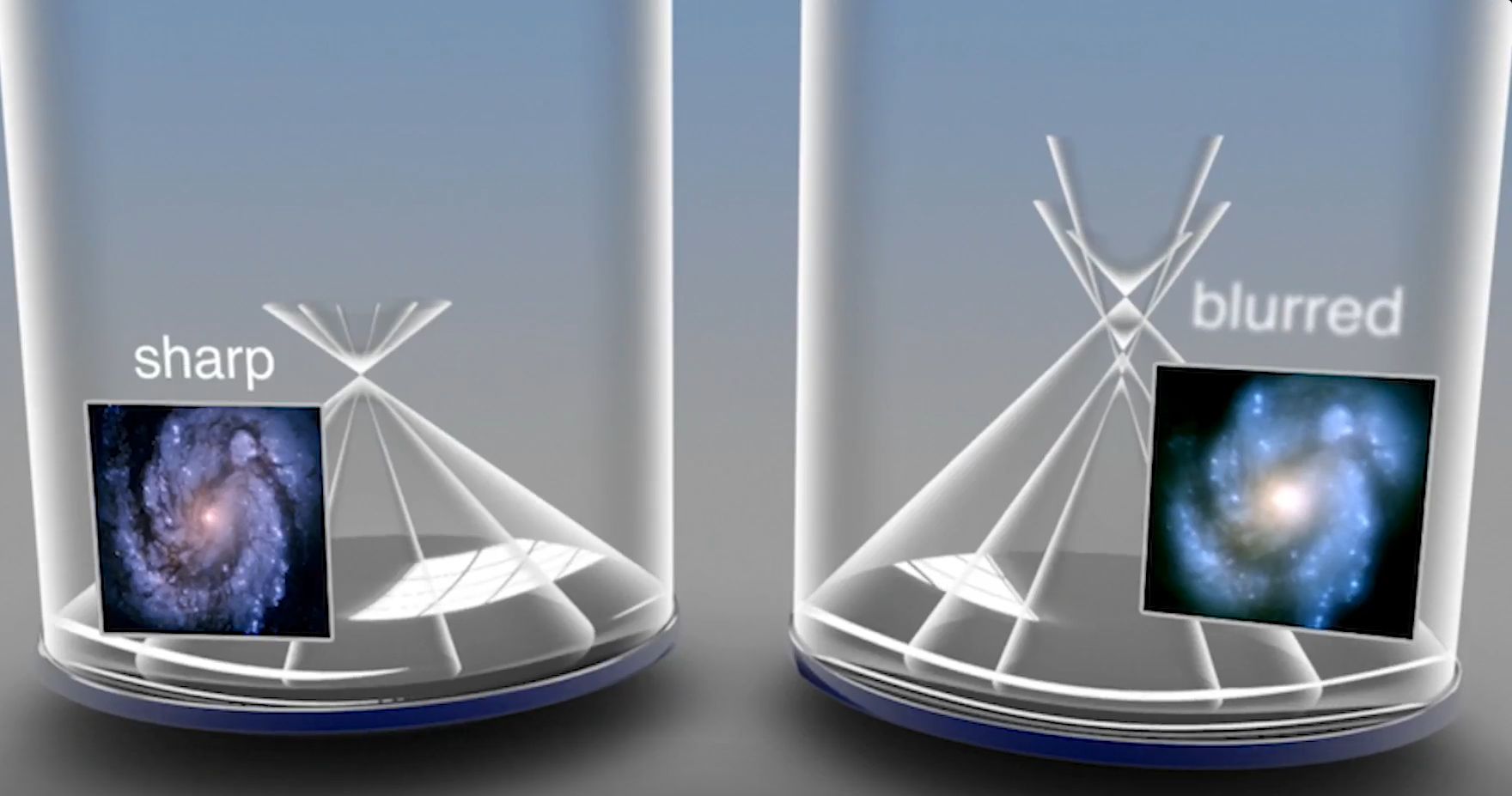
Figure 2: The spherical aberration (right) in Hubble's mirror created multiple focal points, which made its images blurry. (NASA)
This error highlights the importance of robust modeling and testing. Testing and simulation, especially for space-based hardware, must include independent verification and redundancy, exactly what AS9100D and other space electronics standards demand. These standards require independent reviews, traceability, and cross-validation so that no single human or process error can undermine an entire mission.
Causes and Prevention
The failure of the mirror was not due to a lack of testing, but to a lack of independent verification and process discipline. The contractor who manufactured the mirrors for the Hubble Space Telescope had a second test setup that would have revealed the defect, but it was never used. The error was a result of a breakdown in process traceability and quality control, which standards like AS9100D are designed to prevent.
AS9100D and related aerospace quality frameworks require safeguards such as redundant validation and cross-checking of all critical tests, documented traceability for equipment calibration and configuration, and independent oversight to catch single-point process errors. Had these systems been in place, Hubble’s mirror flaw likely would have been caught long before launch. Ultimately, the oversight cost hundreds of millions of dollars and required a dedicated space shuttle servicing mission to install corrective optics.
High Cost of Failure
As the mirror flaw was not discovered until Hubble was already in orbit, the only fix available was a high-risk, high-cost NASA servicing mission. After diagnosing the mirror issue, NASA engineers began what would become the 26 month long, $50 million development process of what became the Corrective Optics Space Telescope Axial Replacement (COSTAR).
Put simply, since the existing mirror was ground and polished so precisely, albeit to the wrong shape, NASA engineers were able to design new optical components with exactly the inverse of the error. Essentially, the COSTAR system would provide to the Hubble Space Telescope the same effect that spectacles provide to individuals with astigmatism.
In 1993, during the first of a series of many planned servicing missions, astronauts installed the COSTAR system to correct the optical distortion. That mission ultimately restored Hubble’s vision and transformed it into a symbol of scientific success, at the cost of hundreds of millions of dollars and a delay of several years. The design and launch of the Hubble Space Telescope remains a defining case study in why pre-launch validation, simulation, and environmental testing are far more practical and cost-effective than discovering and fixing problems in orbit.
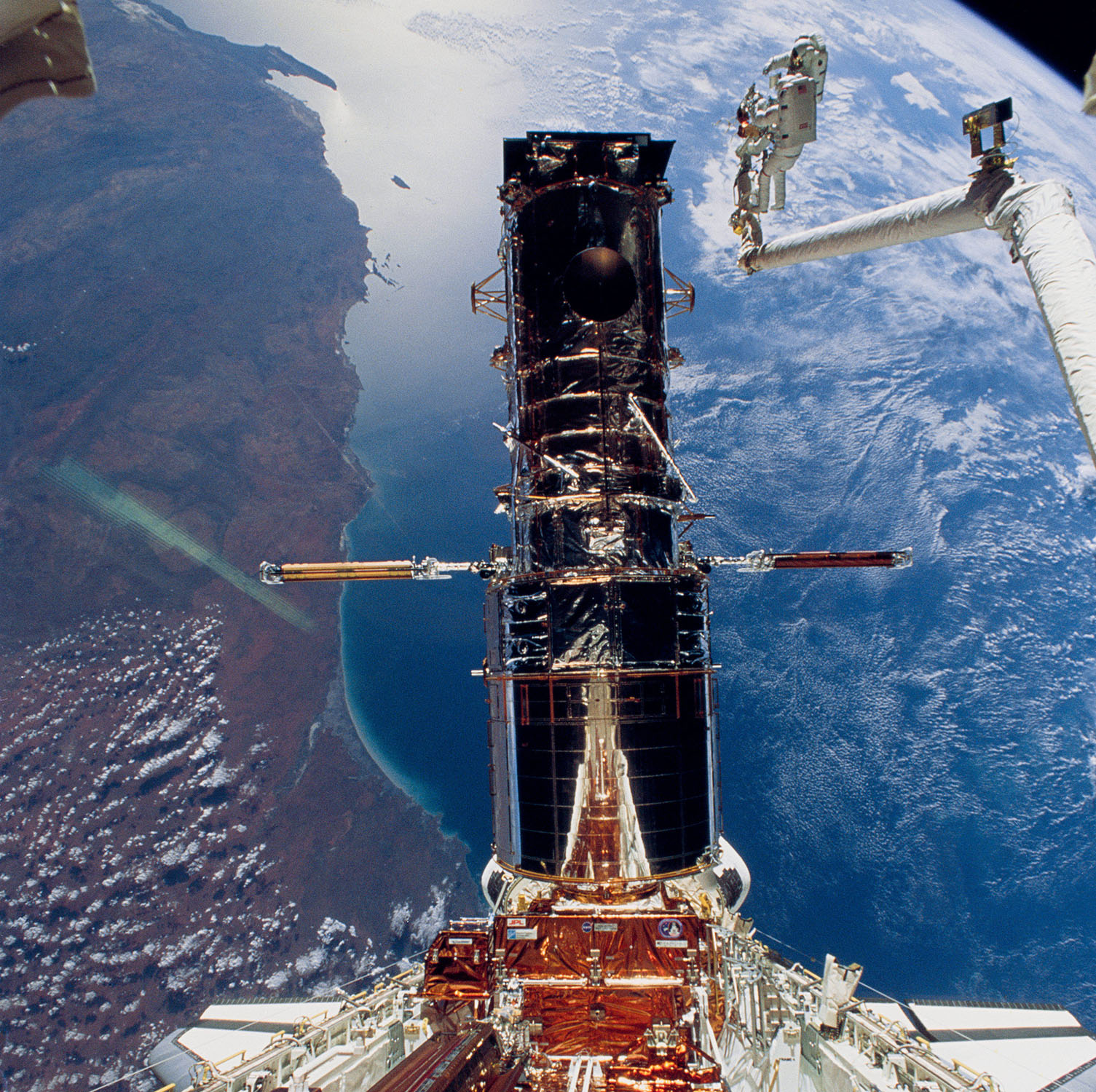
Figure 3: NASA Astronauts working on the Hubble Space Telescope (NASA)
Reliability and Adaptability
While the mirror error represented a breakdown in process and quality control, the Hubble Space Telescope was designed with a tremendous amount of foresight. Hubble included modular instrument bays and service access points in the design, allowing upgrades and repairs in orbit. This architectural choice made the COSTAR fix possible and enabled subsequent servicing missions that have allowed the Hubble Space Telescope to remain operational for more than three decades.
That same systems-level mindset of designing for maintainability, adaptability, and long-term reliability, is central to rugged aerospace and embedded computing design. The careful attention to modularity and adaptability ensures that, even when something goes wrong, the system can recover or evolve without catastrophic mission failure.
Conclusion
The lessons of the Hubble Space Telescope extend far beyond orbital science, and underscore principles that define success in every aerospace and space electronics project. Rigorous testing, independent verification, and disciplined quality control are not just requirements, they are the safeguards that protect complex systems from cascading failure. From spacecraft control computers to rugged embedded systems operating in high-vibration, high-radiation environments, the same standards apply.
The Hubble experience demonstrates how a single overlooked verification step can compromise years of engineering effort. At the same time, the Hubble also illustrates how designing for adaptability and maintainability can allow systems to overcome the most daunting challenges. In practice, that means prioritizing redundant testing setups, enforcing strict traceability of every process and component, and engineering systems with modular architectures that can evolve or recover when conditions change.
As missions grow more ambitious and electronic systems face increasingly harsh and inaccessible environments – from deep-space exploration, to next-generation aircraft, to modern defense platforms – the balance between innovation and reliability becomes ever more critical. The same overarching design principles that allowed NASA to repair the Hubble Space Telescope also ensure modern aerospace systems perform as intended: test thoroughly, verify independently, and design based on maintainability, adaptability, and long-term reliability.
Categories: